New Zealand Market Review
How profitability, affordability and adaptation are framing the future
From natural disaster costs of almost $4 billion in 2023 to expected profits exceeding $1 billion in 2024 and 2025, the New Zealand market is proof of the volatile nature of insurance. We discuss what this signals for insurers ahead, and report on key government focus areas to ensure you’re prepared across this dramatically evolving landscape.
The period of benign weather in Aotearoa through 2024 continues into 2025. ICNZ data reveals only three natural disasters since 2024, with total insured losses of $74 million, slightly up from this time last year when New Zealand recorded no ICNZ-classified catastrophe events.
The combination of this period of low claim levels due to fewer weather events along with increasing premiums following the two large weather events in early 2023 has resulted in significant insurer profits in 2024 and 2025.
Based on company accounts for the 22 largest general insurers in New Zealand, total profit after tax for financial years ending in 2024 exceeded $1 billion for the first time – and the expectation for FY2025 is for even higher returns.
Premiums and profits by year for selected NZ general insurers
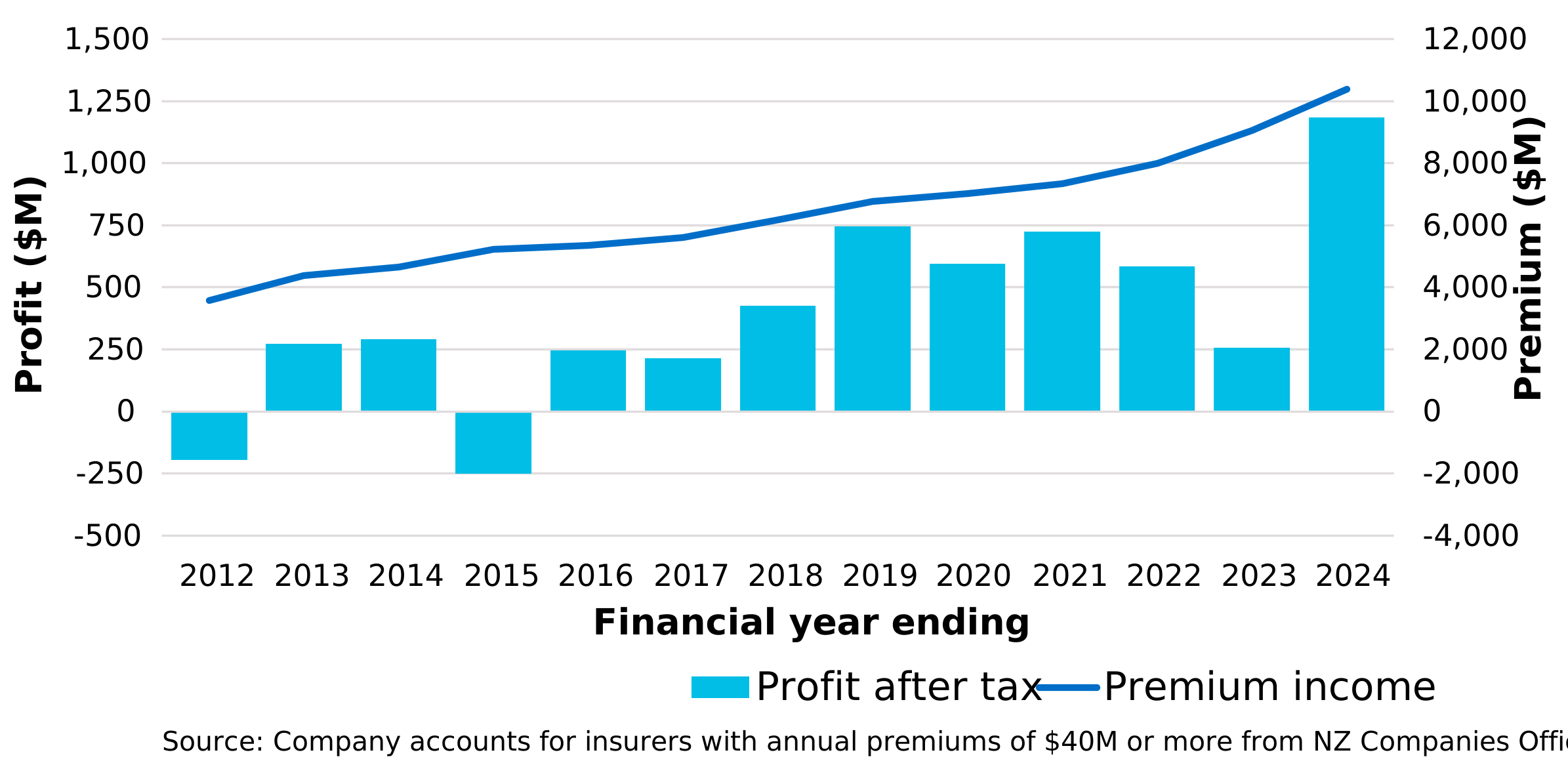
Suncorp and IAG NZ announced increases in profits in 2025 for their New Zealand business and Tower has increased its forecast profit. While the current levels of profit are high, the results for general insurers will vary over time depending on the impact of large catastrophe events. This volatility of results is highlighted by comparing the returns for general insurers against the four major banks in Aotearoa.
Return on equity for selected NZ general insurers and banks
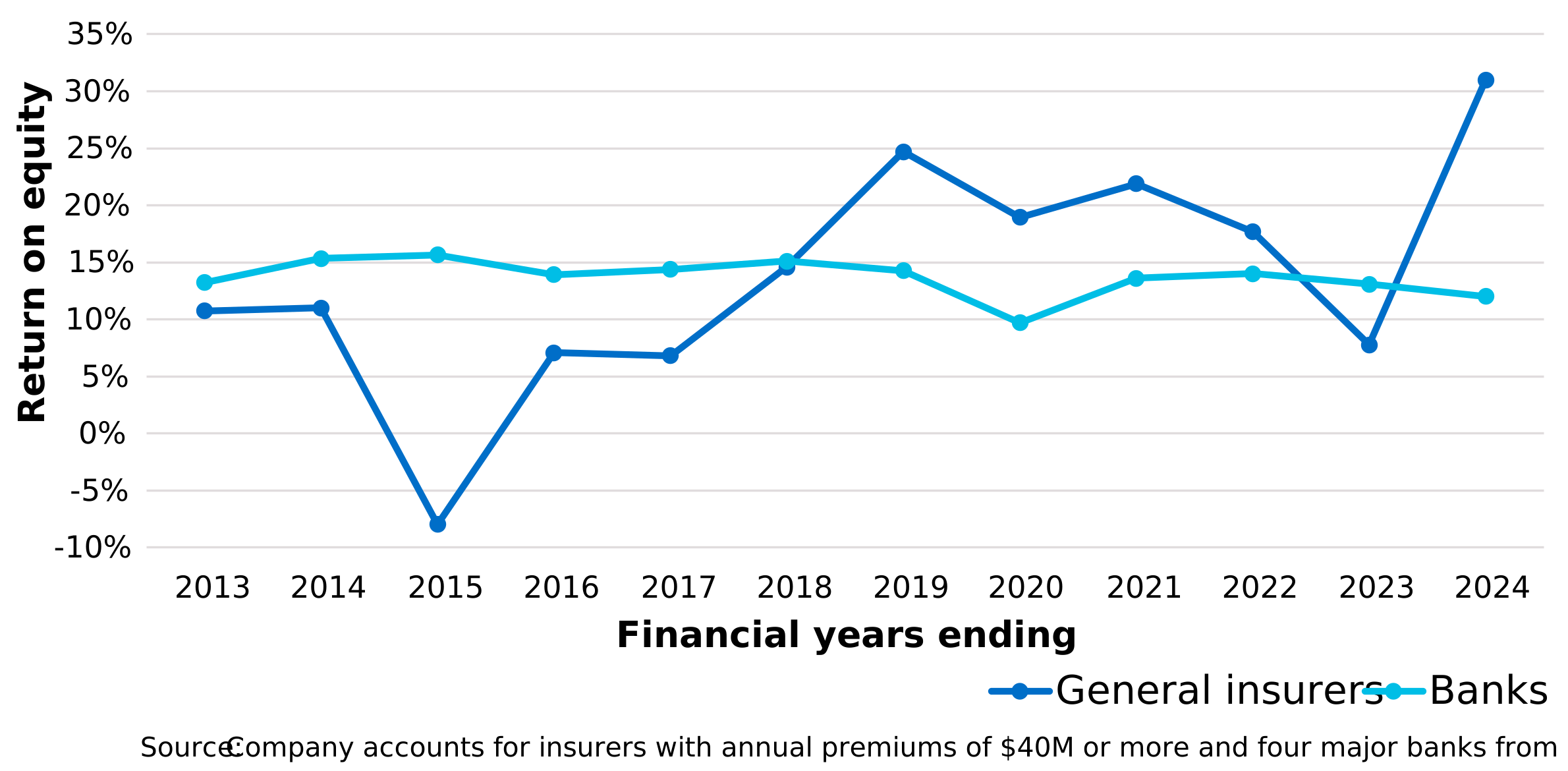
In Aotearoa over the 2010s, the profits for general insurers were severely impacted by the Christchurch earthquakes in 2010 and 2011 and the Kaikoura earthquake in 2016 (which impacts the 2017 results).
Results from 2018-2022 were relatively steady despite natural disasters averaging about $270 million per annum over this period, but 2023 was again impacted by natural disasters, with insurance costs of almost $4 billion in insurance claims.
The 2024 results stand out as the outlier over the past 12 years (and we expect this to be the case for the 2025 results, due in April 2026), which highlight the volatile nature of general insurance profits.
Insurers meeting the minimum threshold of either more than $1 billion in total assets or $250 million in premium income, are classified as a climate reporting entity (CRE) and are required to meet the New Zealand Climate Standards (NZ CS), developed by the External Report Board (XRB). Following public consultation, the XRB has extended the adoption provisions for reporting on Scope 3 greenhouse gas emissions and Anticipated Financial Impacts (AFIs) for a further two years. This means CREs will not be required to report on these elements of NZ CS until their first reporting period commencing after 1 January 2028. This is a welcome change, given most submitters to the consultation process supported the proposed two-year extension. It will give CREs more time to develop their approach to these challenging elements of NZ CS.
The Financial Markets Authority (FMA) has released two reports that provide insights on the climate-related disclosures made by CREs under NZ CS. The FMA report notes a wide range in quality of the climate disclosures, suggesting the better disclosures:
- Present complex concepts in easily understandable formats
- Clearly describe how processes for assessing and managing climate-related risks are integrated into the risk management process
- Provide transparent disclosures relating to greenhouse gas emission targets.
Climate reporting is a fast-developing area of focus locally and internationally. Insurers need to continue to evolve their climate reporting to meet the developing standards and to provide quality information to investors and other financial statement users, such as investors, lenders and creditors. Be sure to check out our in-depth article in the New Year, to keep up to date with this rapidly changing sector.
Early indications are that the large increases in insurance premiums for personal lines insurance (home, contents and motor) in recent years are reducing. Stats NZ’s consumer price index shows premiums for motor insurance have reduced over the past three quarters, while increases for home insurance have reduced and were below the overall inflation rate of 3% in the September 2025 quarter.
Annualised change in CPI for general insurance classes by quarter
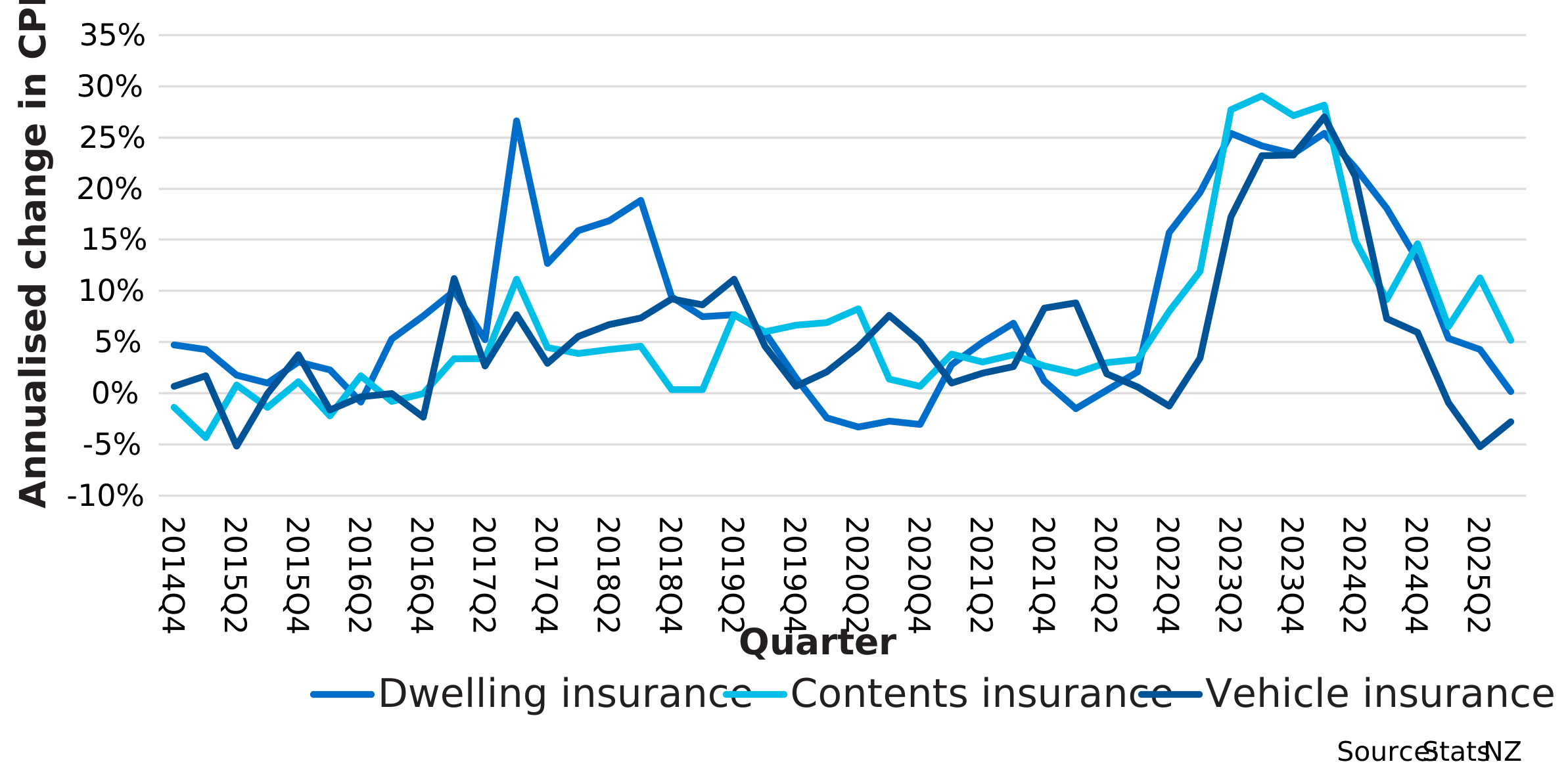
These trends reflect a potential easing in the cost of reinsurance, which has been a significant contributor to previously elevated insurance costs. After a period of increasing reinsurance rates, due to increasing costs of natural catastrophes globally, reinsurers returned to profitability in recent years. This has resulted in an increase in reinsurance capital and increased competition, leading to a softening in reinsurance rates.
The large increases in premiums over the past decade, particularly for home insurance, means insurance affordability remains a significant issue. Consumer NZ, an independent customer advocacy group, has recently released a report into home and contents insurance and the impact climate change may have on insurance affordability. According to the report increasing numbers of people are dropping home and contents insurance due to price. It also notes a lack of transparency on the data insurers are using in risk-based pricing, with no avenue for customers to challenge insurance premiums. The report makes several recommendations, including:
- The Financial Markets Authority should review the pricing of home and contents insurance to confirm premiums are being charged fairly, based on accurately assessed risk
- The Commerce Commission should conduct a market study into the competitiveness of the home and contents insurance market
- The Government should conduct a review to confirm how many households are going without home or contents insurance and how many households are underinsured.
AI adaptation continues to accelerate rapidly, with insurers looking to use AI to provide quicker and more consistent outcomes for customers. While AI offers opportunities for productivity gains, streamlined processes and the development of more accurate risk management models, it also introduces additional risks. These risks include model inaccuracy and bias, operational risk, disinformation, and challenges monitoring and governing AI tools. Insurers are increasing their focus on AI governance, data security and cyber risk management to manage these risks.
Regulators are also thinking about the best ways to mitigate the risks arising from AI. In Aotearoa, the Government released its first national AI Strategy in July 2025. The strategy highlights that a current barrier to businesses implementing AI is uncertainty around how laws and regulatory compliance may apply to AI. To remove this barrier the strategy confirms New Zealand will take a light touch and principles-based approach to AI policy. As part of the strategy, the Ministry of Business, Innovation and Employment published Responsible AI Guidance for Businesses, providing advice to businesses on how to manage risks and regulatory obligations when implementing AI.

Risk reduction and adaptation* continues to be a key focus for the insurance industry. The Government recently released its National Adaptation Framework, which aims to help New Zealand prepare for and respond to the impacts of climate change. The main goal of the framework is to reduce the long-term net costs to society of climate-driven natural hazards. It is based on four pillars:
- Risk and response information sharing – Enabling informed decisions in response to the risks faced, and ensuring risk information is regularly updated and consistent across the nation
- Roles and responsibilities – Clarifying how individuals, communities, the private sector, and local and central governments will work together to develop adaptation plans
- Investment in risk reduction – Prioritising investment in priority locations and communicating how adaptation plans will be financed over time
- Cost-sharing, pre and post-event – Transitioning to a model that incentivises risk reduction and allows markets to adjust as risks change.
Immediate actions arising from the framework are the development of a national flood map that will be publicly available by 2027 and the development of legislation requiring councils to create adaptation plans for priority locations, covering a minimum of 30 years, that identify the risks faced, how these risks will be managed and who will be expected to pay.

New Zealand’s National Adaptation Framework is reshaping how risks are shared, reduced and financed – with insurers playing a central role in future climate resilience.
Insurance will undoubtedly be critical in adaptation, as insurers’ role is to assess risk. While this means plenty of opportunity awaits the sector in terms of consultation at the centre of decision making, future issues may arise. These could include a reduction in property prices if insurers withdraw cover in certain areas. Balancing the two opposing forces will be important and require careful consideration in navigating the fast-evolving landscape.
*Adaptation means strengthening ability to cope with risks from events like floods or storms and the impacts of climate change.
The framework has been welcomed by the insurance industry, although with the caveat that urgent action is needed to ensure insurance remains accessible to New Zealanders in a changing climate.
The global reinsurance community also places value on New Zealand’s strong risk governance and focus on risk reduction. A continued focus on risk reduction and adaptation should help keep reinsurance available.
The framework follows an earlier report in July 2025 outlining a proposed approach to the adaptation framework that was developed by independent reference group IRG. This report recommended a transition period after which post-event central government property buyouts should not occur, except in circumstances of genuine hardship. This recommendation has been criticised by some commentators.
The Government is planning to prepare a formal response to the July 2025 report, but notes a core principle underlying its approach to adaptation is that those who benefit most from an investment in risk reduction should contribute more.
Clarity about long-term government support and financial assistance for property owners affected by severe weather and natural hazard events is important to realign incentives for risk management, and will have flow-on implications for insurance markets. We’re closely following these developments.
The RBNZ has recently released a package of Cabinet papers summarising Cabinet decisions on recommended amendments to the Insurance (Prudential Supervision) Act 2010 (IPSA), which has been under review since 2016. The key proposed amendments include:
- Adjusting the regulatory scope of IPSA, in particular removing the requirement for overseas reinsurers and captive insurers to be regulated
- Empowering RBNZ to issue a range of standards to clarify insurer obligations and allow the RBNZ to sanction insurers for non-compliance
- Updating the fit-and-proper regime to require insurers to seek RBNZ approval prior to appointing directors or senior officers
- Simplifying the regulatory approval process for significant transactions involving the sale and purchase of insurance businesses
- Introducing a broader range of supervisory tools, such as allowing RBNZ to undertake onsite inspections
- Introducing additional enforcement powers, which will enable RBNZ to use more graduated set actions that can be applied in proportion to the level of non-compliance
- Adjusting the distress management provisions to align RBNZ’s powers with other financial services legislation.
The full details of the proposed changes will be released as an exposure draft of an amended IPSA bill, with consultation on the exposure draft expected in early 2026.
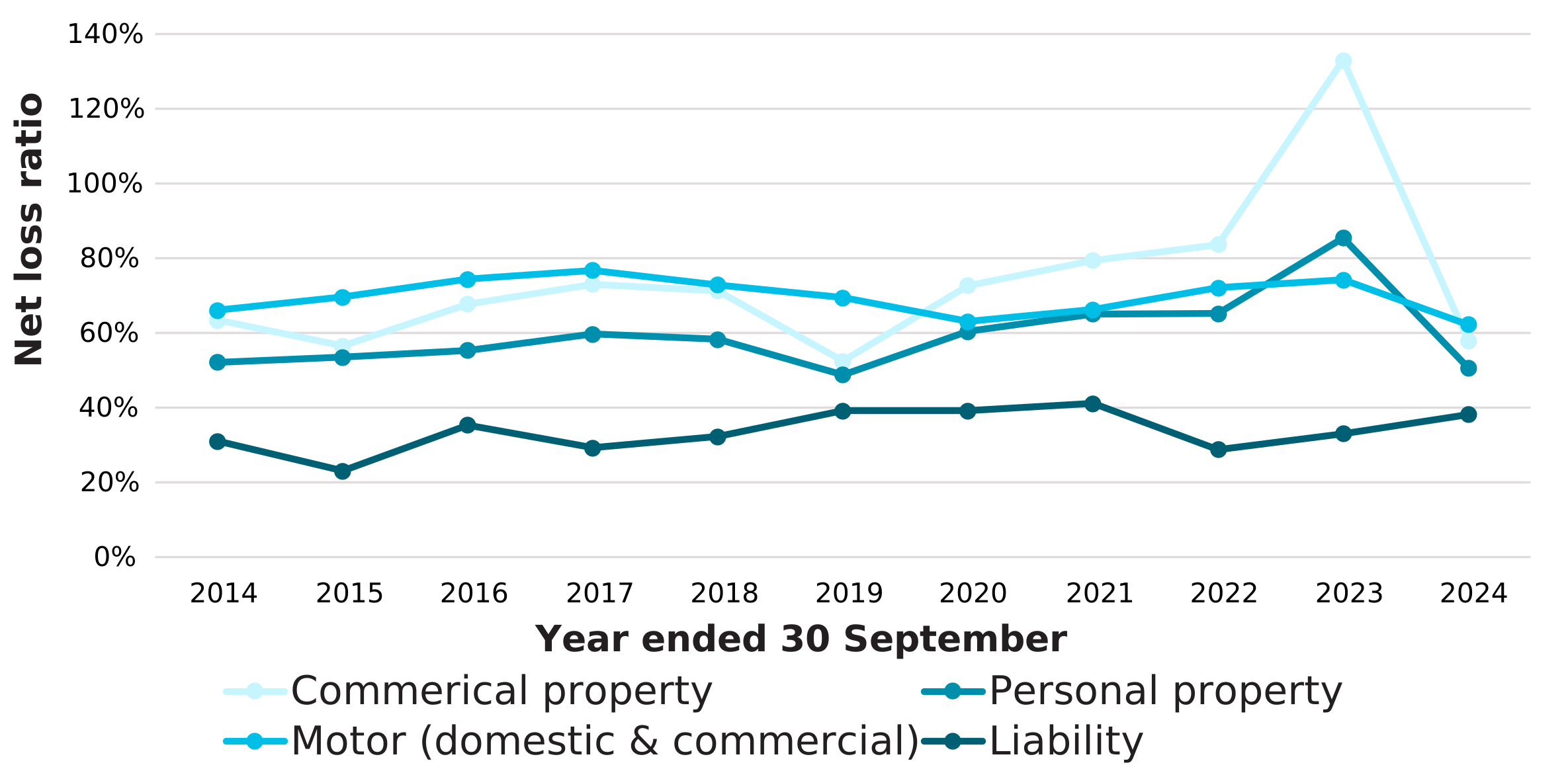
Looking at other classes of business, the following chart shows the historical net loss ratios by class of business for the nation’s insurers.
Net loss ratio results by class of business
Commercial and domestic property
The property classes have seen a dramatic reduction in loss ratios due to the combination of increasing rates in response to 2023 claims experience and a period of benign weather, resulting in lower-than-expected claims costs.
Motor
Loss experience has also improved for motor insurance, partially due to premium rate increases flowing through into the latest results. The 2024 loss ratio is consistent with the 2020 experience, which was lower due to COVID-19 lockdowns. Premiums over the past year (which are yet to be included in the ICNZ statistics) have been reducing based on the consumer price index data, so potentially loss ratios will increase in 2025.
Liability
Liability insurance continues to be profitable, with net loss ratios consistently below 40%. Due to the impact of the Accident Compensation Corporation, which provides cover for bodily injury claims but removes the right for injured parties to sue, liability insurance in New Zealand is small. Total liability premiums in 2024 make up less than 10% of the total insurance premiums across all four classes of business in the year to 30 September 2024..
Property insurance loss ratios have dramatically improved, driven by strong premium increases and a rare period of benign weather.

This change has been proposed as the Government believes the current system results in councils being left with large costs when other parties such as builders declare insolvency. This in turn results in councils becoming more risk averse in the consenting process, which creates unnecessary delays. The move to a proportionate liability system is likely to include a requirement for builders to have professional indemnity or builders warranty insurance, which is offered in Australia but not currently provided in New Zealand. Details on what this might mean for the insurance sector are still yet to be released but are expected in early 2026.
Despite two extremely profitable years following more than a decade of high catastrophe events, insurers cannot afford to lose focus in this volatile market. Insurers will need to ensure they understand the needs of their customers and are offering affordable products with clear cover that meets these needs. Preparing and planning for a raft of regulatory changes, staying competitive amid softening rates and keeping abreast of the latest adaptation requirements will all lay a solid foundation towards achieving insurer sustainability in the months and years ahead.
Meet our authors